

Healing Trauma and Addiction
For many people struggling with addiction, the substance isn’t the problem—it’s the solution. It’s the way they’ve learned to numb emotional pain, silence intrusive thoughts, or create a temporary escape from overwhelming distress. Beneath the surface of substance use disorders, compulsive behaviors, and self-destructive cycles, trauma often lingers as the unhealed wound driving the addiction forward.
Understanding this deep connection between trauma and addiction is essential. When only the addiction is addressed, exploring its roots, one can remain trapped in an endless cycle of relapse, guilt, and shame. True healing requires going beyond the surface to confront and process the underlying pain that fuels substance use.
Key points
Many people use substances to cope with unprocessed emotional pain and distress from past traumatic experiences.
Childhood trauma and adverse experiences increase the risk of addiction by altering brain function and stress responses.
EMDR prioritizes emotional safety and stabilization through techniques like bilateral stimulation before addressing deeper trauma work.
With therapy, healthy coping skills, and support, clients can heal trauma, break addiction cycles, and reclaim their lives.
How Trauma Fuels Addiction
Trauma reshapes the brain and nervous system, leaving long-lasting effects on emotional regulation, memory, and stress responses. Whether a person has experienced childhood abuse, neglect, violence, or even more subtle forms of emotional trauma, their nervous system may remain in a state of hypervigilance or numbness.
To cope with overwhelming feelings, many people turn to substances or addictive behaviors. Alcohol may quiet intrusive memories. Opioids might soothe emotional pain. Stimulants may offer a sense of control or energy in the face of deep exhaustion. The addiction becomes a form of self-medication—one that temporarily eases suffering but ultimately deepens the wounds.
Breaking the Cycle
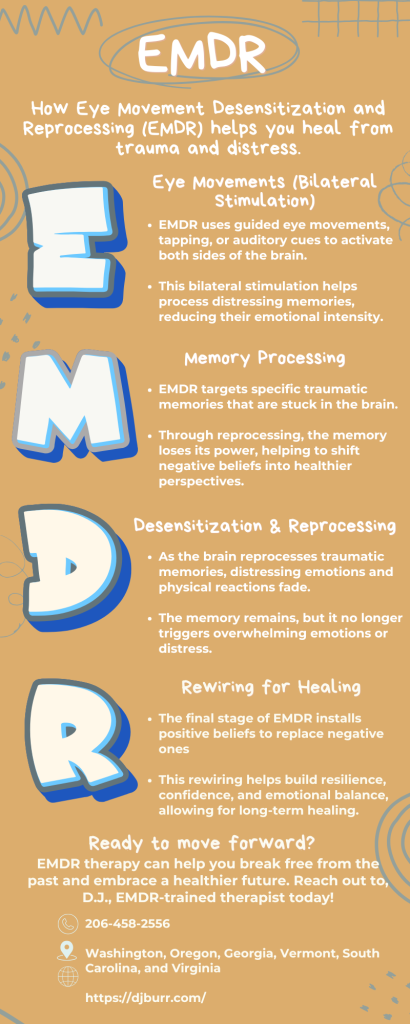
Traditional addiction treatment models often focus on abstinence and behavioral change, but they don’t always address the root causes of addiction. EMDR (Eye Movement Desensitization and Reprocessing) offers a trauma-focused approach that directly addresses the underlying trauma often driving addictive behaviors.
Here are a few key ways to integrate EMDR into addiction treatment:
1. Normalize the Trauma-Addiction Connection
Many individuals struggling with addiction experience deep shame and self-blame. EMDR can help uncover the connection between past trauma and addiction, empowering individuals to see that they are not “broken” but rather responding to unresolved trauma. This understanding fosters self-compassion and paves the way for healing.
2. Prioritize Safety and Stabilization
Before processing trauma, it’s essential to establish emotional safety. EMDR is designed to help increase emotional balance by using bilateral stimulation techniques that can calm the nervous system and promote a sense of safety. Grounding exercises, mindfulness, and somatic therapies can complement EMDR to help feel regulated before diving into deeper trauma work.
3. Use EMDR to Process Trauma
Unlike traditional talk therapy, which may only address the surface of trauma, EMDR allows space to process deeply held memories and emotional responses that are often stored in the body. By targeting the emotional and sensory elements of trauma, EMDR can help resolve the pain that fuels addiction, allowing healing on a deeper level.
4. Address the Social and Environmental Factors
Healing from trauma and addiction is not just about individual work. EMDR can be part of a broader approach that also addresses social and environmental factors, such as setting boundaries, leaving toxic relationships, and engaging with supportive recovery communities like 12-step programs or trauma-informed therapy groups. Creating a supportive environment is key to long-term success.
A Compassionate Path Forward
The road to recovery from trauma and addiction is not linear. It requires patience, self-compassion, and a willingness to sit with discomfort. If you or someone you care about is struggling with addiction and the effects of trauma, DJ Burr at ABLE Life Recovery can help. With a compassionate, trauma-informed approach, DJ Burr specializes in guiding you toward more profound healing, self-empowerment, and lasting recovery. Reach out today to begin the journey toward a healthier, more fulfilling life.